
Agentforce vs. Cross-Platform AI Agents: Which Approach Fits Your Team?
Salesforce Agentforce is powerful inside Salesforce. But what happens when your operations span Jira, Zendesk, and a dozen other tools? A clear comparison of platform-native vs. cross-platform AI agent approaches.
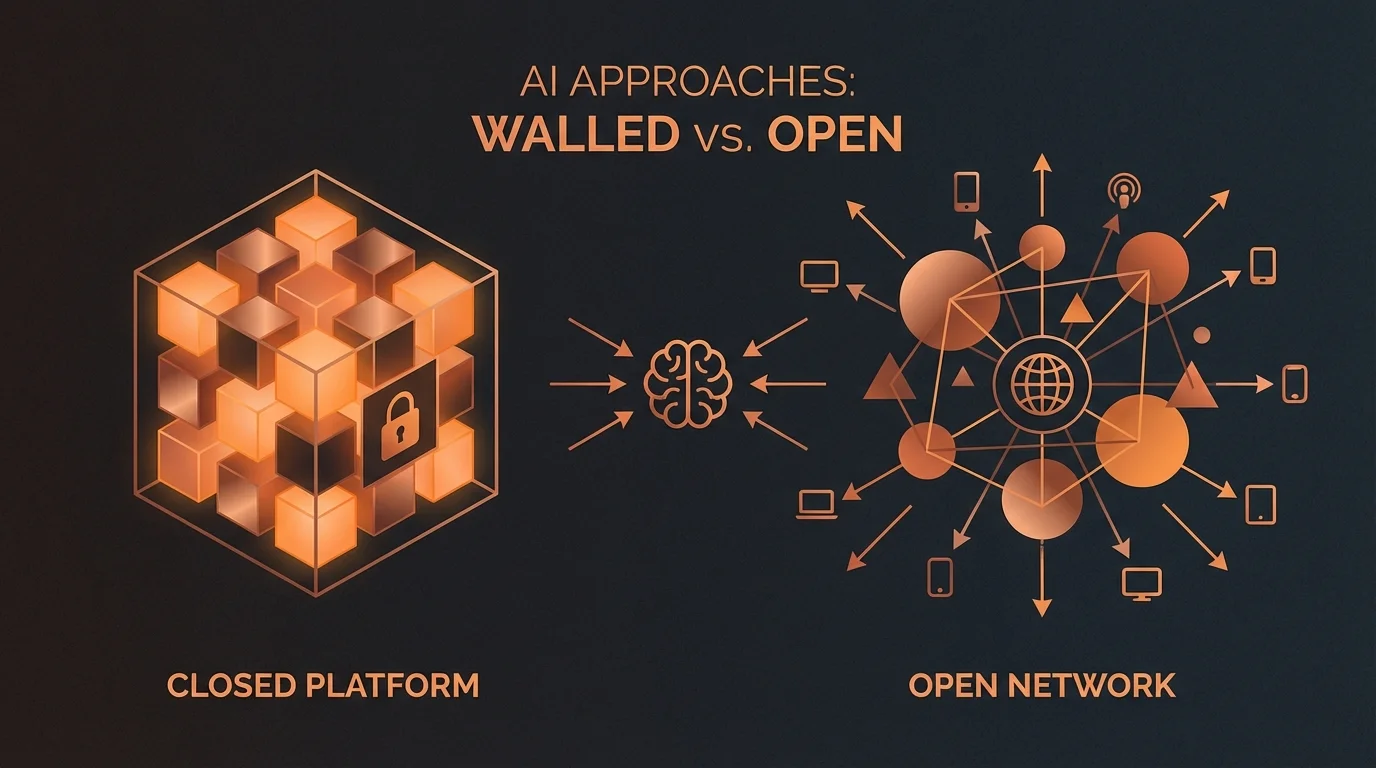
Quick Answer: Agentforce works best when your entire operations stack runs inside Salesforce. If your team uses Jira for engineering, Zendesk for tickets, or any non-Salesforce system for critical workflows, cross-platform AI agents will deliver dramatically more automation coverage. The key question is whether your automation dead-ends at Salesforce's boundary.
Salesforce Just Made a Big Bet on AI Agents
In March 2026, Salesforce launched the Agentforce Contact Center — unifying voice, digital channels, CRM data, and AI agents within the Salesforce ecosystem. With over 12,000 implementations and counting, Agentforce is the most widely deployed enterprise AI agent platform in the market.
It's impressive technology. Within Salesforce, Agentforce agents can handle customer inquiries, route cases, access knowledge bases, and take actions across Service Cloud, Sales Cloud, and the broader Salesforce data model. The "digital labor" narrative is compelling, and for teams that live entirely inside Salesforce, Agentforce delivers real value.
But here's the question nobody at Dreamforce is asking: what percentage of your team's actual work happens inside Salesforce?
For most operations teams, the answer is somewhere between 30% and 50%. The rest lives in Jira, Zendesk, Confluence, Slack, carrier portals, internal tools, and email — and the context switching between those platforms is one of the biggest hidden costs in support operations. That's where the Agentforce story gets complicated.
What Agentforce Does Well
Credit where it's due. Agentforce has genuine strengths that matter for enterprise buyers:
Deep CRM context. No external agent will ever match Agentforce's native access to Salesforce data. Customer records, opportunity pipelines, case histories, account hierarchies — it's all available natively, with no API overhead or sync lag. When the agent needs to check a customer's lifetime value or contract renewal date, it's instant.
Einstein Trust Layer. Salesforce's approach to AI governance — data masking, prompt injection protection, toxicity filtering, audit trails — is genuinely enterprise-grade. For regulated industries, this matters enormously.
Massive ecosystem. The AppExchange has thousands of integrations, and Agentforce can trigger flows that connect to many of them. MuleSoft extends this further with API-based connectivity to virtually any system.
Market validation. 12,000+ implementations means battle-tested infrastructure, a large partner ecosystem, and enterprise procurement teams that already trust the Salesforce name.
Where the Platform-Native Approach Breaks Down
The challenge isn't what Agentforce can do — it's what it can't do without significant additional investment.
The MuleSoft Tax
Agentforce's cross-platform story depends entirely on MuleSoft. Want your Agentforce agent to create a Jira ticket? You need MuleSoft Composer or MuleSoft Anypoint Platform. Want it to read Zendesk ticket history? MuleSoft. Want it to update a carrier portal? MuleSoft — plus custom API development for portals without standard APIs.
MuleSoft is a powerful integration platform. It's also:
- A separate purchase with its own pricing tier (Composer starts at $750/month; Anypoint is significantly more)
- A separate skill set — your team needs MuleSoft developers or certified consultants
- A separate maintenance burden — every API connection needs monitoring, error handling, and version management
- A latency layer — every cross-platform action adds API round-trip time
For a team that needs Agentforce to work across Salesforce, Jira, and Zendesk, the total cost of ownership includes Agentforce licensing + MuleSoft licensing + integration development + ongoing maintenance. The TCO can easily double or triple the Agentforce sticker price.
The Salesforce-Centric Worldview
Agentforce agents think in Salesforce terms. Cases, opportunities, accounts, contacts — these are first-class objects. But a Jira epic isn't a Salesforce case. A Zendesk ticket has a different lifecycle, different custom fields, different escalation semantics.
When you map Jira or Zendesk concepts into Salesforce objects via MuleSoft, you inevitably lose nuance. Jira's sprint structure, story points, and component assignments don't have natural Salesforce equivalents. Zendesk's triggers, automations, and satisfaction ratings live in a different conceptual model. The integration works — but it works by flattening rich platform-specific data into generic Salesforce fields.
This matters when your AI agent needs to make intelligent decisions based on Jira context (is this sprint overloaded? should this bug be assigned to the mobile team or the API team?) or Zendesk context (has this customer submitted three tickets this week? is their satisfaction trending downward?). Those decisions require native platform understanding, not a flattened data sync. (For more on why this matters, see our guide on cross-platform AI agents for Salesforce, Jira, and Zendesk.)
The Single-Platform Blind Spot
Here's the most fundamental limitation: an Agentforce agent starts and ends its work inside Salesforce. Its view of the world is Salesforce-centric by design.
When a customer case requires a coordinated response across multiple platforms — escalate in Jira, update in Zendesk, flag in Salesforce, notify in Slack — the Agentforce agent can initiate the Salesforce portion and trigger MuleSoft flows for the rest. But it can't natively observe what's happening in Jira. It can't react to a Jira status change in real time. It can't see that the Zendesk ticket was updated by the customer 10 minutes ago with new information that changes the escalation priority.
Each platform interaction is a one-way push through MuleSoft, not a continuous awareness of the full case lifecycle across all systems.
What Cross-Platform AI Agents Do Differently
A cross-platform AI agent isn't anchored to any single system. It operates across Salesforce, Jira, Zendesk — and any other platform in the workflow — as a native participant in each.
Simultaneous multi-platform awareness. The agent doesn't just query platforms when triggered. It maintains awareness of case state across all connected systems. When a Jira ticket's status changes, the agent knows immediately — and can take action in Zendesk and Salesforce if the SOPs call for it.
Native platform operations. Instead of flattening Jira data into Salesforce fields, the agent works with Jira's native concepts — sprints, epics, story points, components. It creates Jira issues that look like a senior engineer wrote them, not like a CRM system auto-generated them.
SOP-driven decision making. The agent follows your team's actual standard operating procedures — the documented workflows that define how cases should flow between platforms, when to escalate, and what actions to take at each step. This is fundamentally different from pattern-matching on historical ticket data.
Platform-agnostic routing logic. When the agent decides a Zendesk ticket needs engineering attention, the routing decision isn't constrained by Salesforce's case model. It can route directly to the right Jira project, team, and sprint based on the actual engineering workflow — not a Salesforce abstraction of it.
Side-by-Side: Agentforce vs. Cross-Platform Agents
Salesforce CRM depth:
- Agentforce → Native, unmatched
- Cross-platform → API-based, strong but not native
Jira workflow support:
- Agentforce → Via MuleSoft, limited to synced fields
- Cross-platform → Native operations, full Jira model
Zendesk integration:
- Agentforce → Via MuleSoft
- Cross-platform → Native operations
Cross-platform awareness:
- Agentforce → One-way pushes via integration layer
- Cross-platform → Simultaneous multi-platform state
Setup complexity:
- Agentforce → Salesforce config + MuleSoft development
- Cross-platform → SOP ingestion + platform connections
Total cost (3 platforms):
- Agentforce → Agentforce + MuleSoft + dev/maintenance
- Cross-platform → Single platform fee
AI governance:
- Agentforce → Einstein Trust Layer (enterprise-grade)
- Cross-platform → Varies by vendor
Best for:
- Agentforce → Salesforce-heavy orgs with existing MuleSoft
- Cross-platform → Multi-platform ops teams needing unified automation
When to Choose Agentforce
Agentforce is the right choice if:
- 80%+ of your team's work happens in Salesforce. If Salesforce is truly the center of gravity and other platforms are peripheral, Agentforce's native depth wins.
- You already have MuleSoft deployed. If your organization has MuleSoft infrastructure and expertise in place, the incremental cost of connecting Agentforce to other platforms is lower.
- Regulatory compliance requires the Einstein Trust Layer. For financial services, healthcare, or other regulated industries where Salesforce's specific governance capabilities are a compliance requirement.
- Your IT team prefers a single-vendor stack. The Salesforce ecosystem offers a coherent, well-supported technology stack with a massive partner network.
When to Choose a Cross-Platform Approach
A cross-platform agent makes more sense if:
- Your workflows span 3+ platforms equally. When Salesforce, Jira, and Zendesk (or other tools) each play a critical role in case resolution, no single platform should be the AI's home base.
- You need AI that follows your SOPs, not historical patterns. If your competitive advantage is in your operational procedures — and you want AI that executes them precisely — SOP-driven agents deliver faster time to value. (See also: how AI agents learn from your team's feedback.)
- MuleSoft isn't in the budget. For mid-market companies, adding MuleSoft to the stack specifically to enable cross-platform AI agents can double the project cost.
- Your team measures success in end-to-end case resolution, not platform-specific metrics. If the KPI is "time from customer report to resolution across all systems," you need an agent that sees the full picture.
The Trend: Multi-Platform Is the Future
The industry is moving toward cross-platform agent interoperability. Atlassian's "Agents in Jira" launch in February 2026 — allowing AI agents to be assigned tasks alongside human teammates — explicitly supports an open toolchain approach via MCP (Model Context Protocol). MuleSoft itself is building agent-to-agent communication protocols. ServiceNow's AI Agent Orchestrator is designed to coordinate agents across systems.
Even Salesforce acknowledges this direction. Their MCP Connector and Agent Fabric initiatives are about enabling multi-agent, multi-platform coordination. The question isn't whether cross-platform AI agents are the future — it's whether you build that capability through a single vendor's integration layer or through a purpose-built cross-platform approach.
For operations teams drowning in platform switches today, the answer depends on where your work actually lives — and how fast you need the AI to start helping.
Further Reading
- Agentforce Alternatives: What to Use When Salesforce AI Falls Short
- AI Case Routing Across Salesforce and Jira
- The True Cost of Context Switching for Support Operations
CorePiper builds cross-platform AI agents that work natively across Salesforce, Jira, and Zendesk — following your SOPs, no MuleSoft required. See how it compares →
Frequently Asked Questions
Q: What is the main limitation of Agentforce for enterprise teams?
Agentforce is designed specifically for the Salesforce ecosystem, meaning it cannot take actions in Jira, Zendesk, or other external platforms. When a workflow requires creating a Jira ticket or updating a Zendesk case, Agentforce reaches a dead end and requires manual human intervention.
Q: When should a team choose Agentforce over cross-platform AI agents?
Choose Agentforce if your entire operations workflow lives inside Salesforce — sales, service cloud, and marketing all within the Salesforce platform. If your team has already invested heavily in Salesforce and your support workflows rarely touch external systems, Agentforce's native integration provides genuine value.
Q: How do cross-platform AI agents handle multi-system workflows?
Cross-platform agents maintain context across systems, executing actions in Salesforce, creating tickets in Jira, and updating cases in Zendesk within a single workflow. They use SOP-driven logic to make routing decisions based on customer priority, ticket type, and team capacity rather than fixed rules.